
studyus
What should I study next?
studyus is a study planner that connects course concepts, practice, and deadlines to recommend what to study next. A product engineering case study.
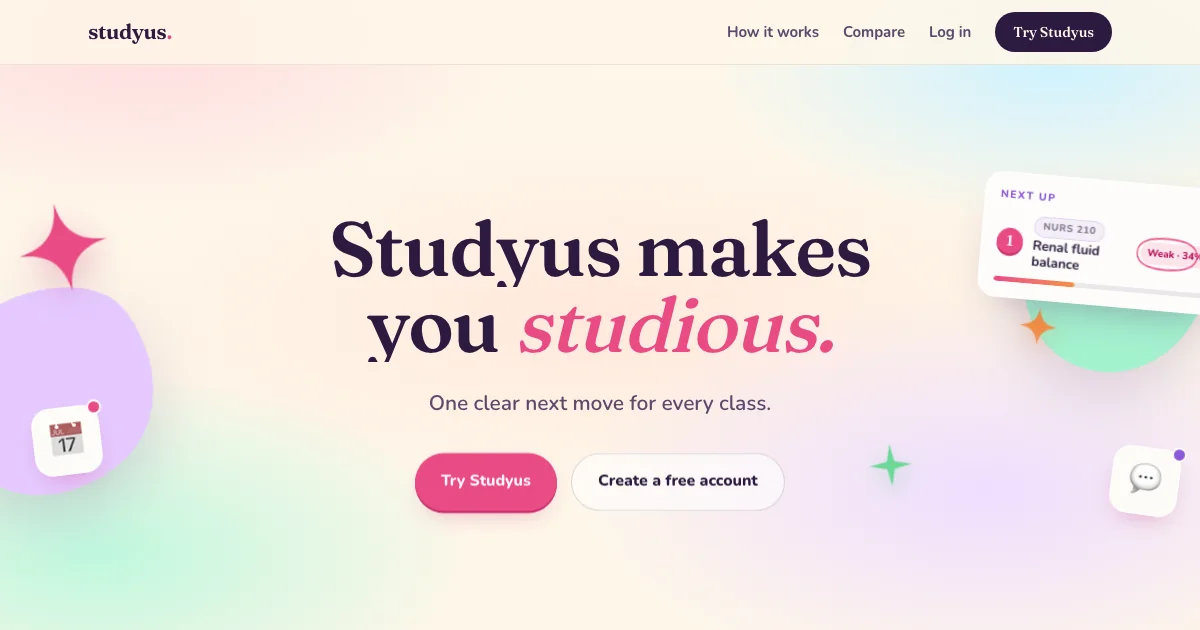
What is studyus?
studyus connects a student’s course concepts, deadlines, and learning activity to a recommended next step. It brings planning and practice into the same loop: choose a concept, work on it, and use the resulting evidence to inform what comes next.
My work
I built the product around a question I kept returning to as a tutor: what does this student need to understand next? That meant connecting the study planner, the concept map, and the practice experience rather than treating each as a separate tool.
The engineering work spans the student interface, the model of learning activity, and the rules that turn that activity into recommendations.
The problem: a calendar cannot tell you what you understand
A deadline tells a student when something is due. A calendar tells them when they have time. Neither tells them whether an unfamiliar concept depends on something they have not understood yet.
I wanted the next action to connect those questions. A useful study plan needs to account for the work due, the evidence of understanding, and the prerequisites that make progress possible.
Design decisions
Record learning evidence against concepts
Courses are broken into concepts with prerequisite links. Practice attempts and instructional activity become evidence attached to those concepts. Mastery is derived from that evidence and its recency, so the application can distinguish recent practice from a topic that has been left alone.
Keep recommendations explainable
The next-move system uses explicit scoring rules. It can surface weak prerequisites and stale concepts while showing why a task deserves attention. That makes the recommendation inspectable and gives me a concrete set of rules to improve.
Require an answer before feedback
Quick Quiz asks the student to retrieve an answer before showing feedback. Attempts are recorded against the relevant concept, connecting practice back to the information used by the planner.
What the application supports
The dashboard brings together courses, deadlines, grades, study tasks, and a recommended next move. The learning flow can identify prerequisites that need attention and resurface concepts that have not been practised recently.
Review currently uses decay and stale-topic rules. Personalized spaced-repetition intervals are still planned. The implemented outcome is a connected planning and practice workflow; improved retention needs to be established through learner evidence.
Related work
The learning model grows out of my writing on tutoring and education technology. For another use of evidence that changes over time, see DAWKA’s working documents.
Try studyus, or talk to me about building an education product.